This is the multi-page printable view of this section.
Click here to print.
Return to the regular view of this page.
Sensors — Measure or Switch Anything Off-Grid
OGLAS sensors read or switch anything in the field — water, power, vehicles and engines, weather and environment, safety, and access. Grouped by what they do, battery-friendly, off-grid, no subscriptions.
OGLAS sensors are small wireless devices that read something off the world and
report it — level, current, hours, position, temperature, a pulse — and some also
act: switch a load, open a gate, ring a bell. They each pair with a
hub that logs the data and raises alerts.
Whether it’s a trough in a back paddock, a forklift in a yard, a freezer in a shed,
or a pump on a remote bore, the job is the same: watch it, report it, and tell you
when it changes. There are a lot of sensors, so they’re grouped by what they do —
start with a category and dig in.
A look at the hardware
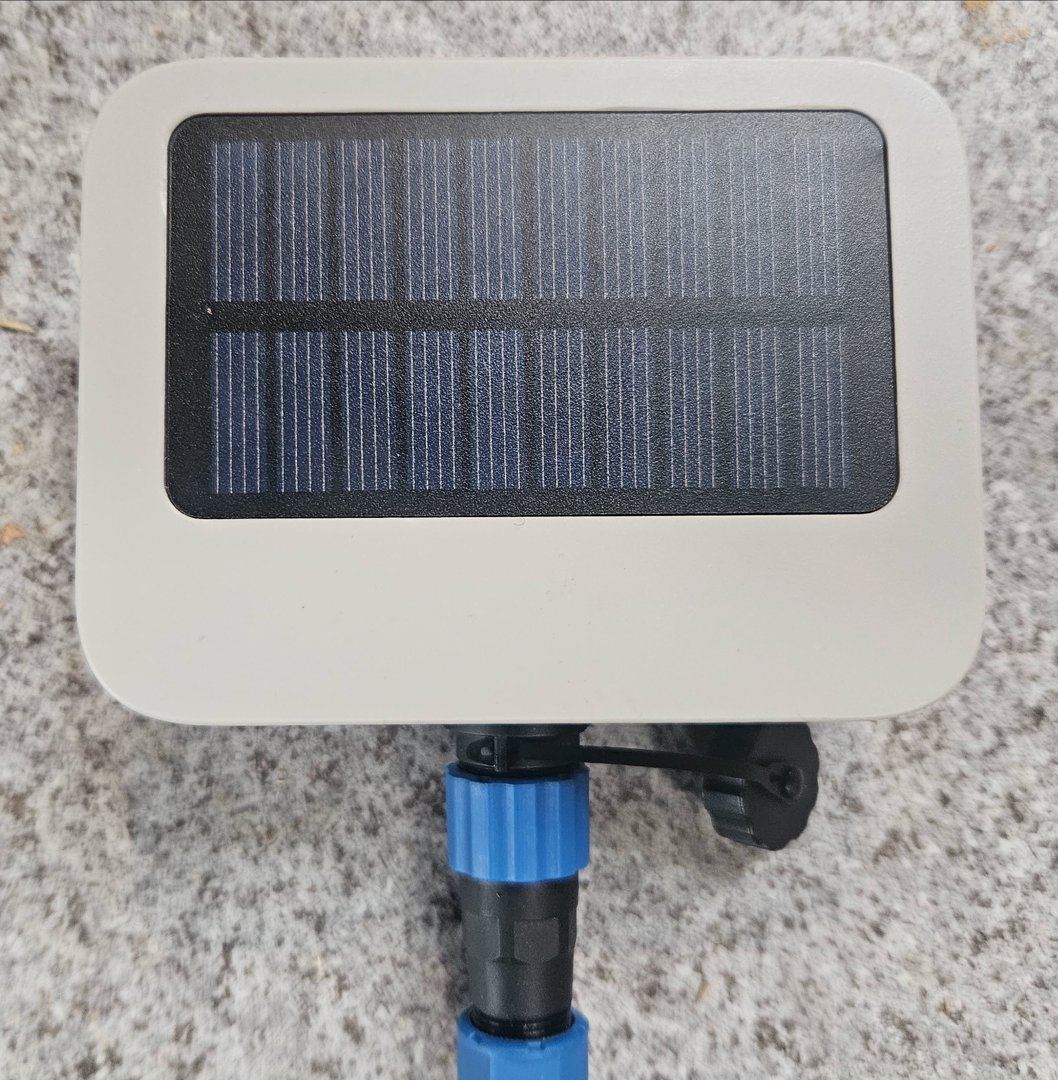
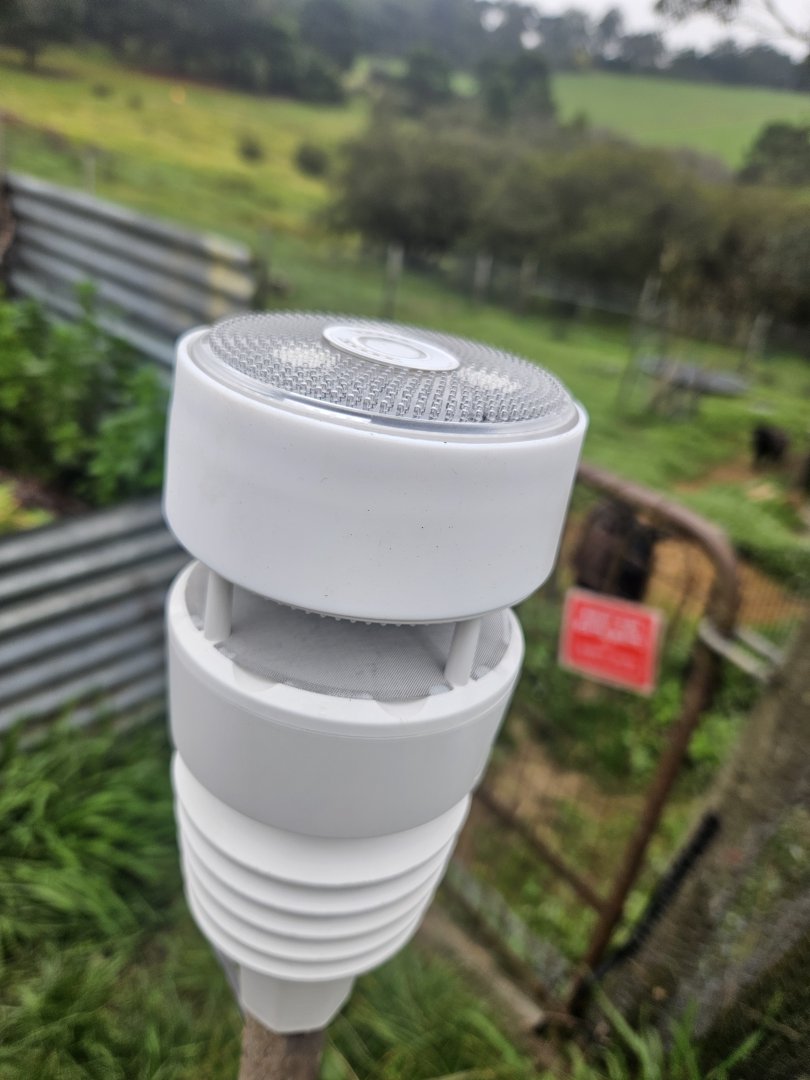
OGLAS sensors are built to live outside and run on their own power. Tap to enlarge:
Sensor categories
Tank and trough level, pump control, flow & pressure, soil moisture, and water
quality — know what you’ve got, where it’s going, and that it’s good.
Solar/MPPT power management, energy monitoring on any source, and a
Smart Switch that acts on what they see.
Trip and hours tracking with GPS, OBD-II and IMU (including tip/roll-angle rollover
warnings), plus generators and static engines.
On-site weather, temperature anywhere, frost warning, air quality, and the generic
analog node that underpins many of these.
Smoke and gas, noise sensing, and trap activation — detect the event and raise the
alert the moment it happens.
Door and gate state and control, the bell that turns events into
sound, and electric-fence monitoring.
Motion sensing, marked-area monitoring, and on-site animal-type detection (fox,
rabbit, and more) — a camera as another sensor, with the footage staying yours.
New sensors land here regularly, and most custom builds start with one.
If your site has a thing that needs watching (or switching on and off based on
conditions) and there’s no clean line back to where you sit,
tell us — that’s the sweet spot for OGLAS.
1 - Water Sensors
OGLAS water sensors — tank and trough level, pump control, flow and pressure, soil moisture, and water quality. Know what you’ve got, where it’s going, and when something’s wrong.
Water is the thing an off-grid site can least afford to get wrong. OGLAS water
sensors watch how much you’ve got, where it’s flowing, and what condition it’s in —
and can switch the pump that fixes it.
- Water Trough Level — GPS-pinned trough monitoring with out-of-water alerting and season-long battery life.
- Tank level — how much water is in the tank, on whatever schedule you set.
- Water Pump — start, stop, and confirm a pump on level or surplus, with dry-run protection.
- Water Flow & Pressure — line flow and pump pressure, to catch leaks, blockages, and a tiring pump.
- Soil Moisture — moisture at root depth, so irrigation runs on need, not habit.
- Water Quality — pH, salinity, temperature and turbidity for tanks, troughs, dams, and aquaculture.
1.1 - Water Trough Level
GPS-pinned trough monitoring with out-of-water alerting and season-long battery life.
The OGLAS Water Trough Level sensor is purpose-built for stock water — the troughs scattered across paddocks where animals depend on a working float valve and a charged pump. If a trough goes dry, you find out before the animals do.
What it does
- Reports level periodically — default interval an hour; configurable down to minutes when you’re commissioning, back up to once a day when you trust it.
- Raises an immediate out-of-water alert when level drops below a configured threshold — independent of the reporting interval. This is the message that matters and it doesn’t wait.
- Includes GPS coordinates with each reading, so the hub knows which trough this is without you having to track node-id-to-paddock mappings by hand.
- Reports battery voltage so you can replace the battery on schedule, not on failure.
Why GPS
A property with twenty troughs is a labelling nightmare. Without GPS:
- Every trough needs a unique node name and a written record of where each name lives.
- Move a trough and you have to remember to update the spreadsheet.
- Six months in, nobody can remember if
trough-7 is the one in the south paddock or the back fence.
With GPS, the trough self-reports its location every cycle. The hub plots them on a map, and “trough-7 has dropped to 80 mm” becomes “the trough at -38.51, 145.20 has dropped to 80 mm” — actionable without a paper map.
GPS is only powered when needed (once per reporting cycle, briefly), so the power cost is modest.
Long battery life
Stock troughs are usually a long way from anything you can plug into. The Water Trough sensor is built around battery life as the dominant design constraint:
- Ultra-low deep-sleep current — full power-down of the GPS, the radio, and the level sensor between samples.
- Wake, read, send, sleep — wake, read level, get a GPS fix if it’s been long enough, send, wait briefly for confirmation, sleep. The whole cycle is under 30 seconds of activity per hour.
- Single LiPo + small solar panel — designed to run year-round on a single small panel. Without solar, a single 2000 mAh cell will run for months on hourly reports.
Level sensing
A handful of options depending on the install:
- Submerged pressure transducer — most accurate, works through algae and floating debris, but needs a wired probe in the water.
- Ultrasonic range finder mounted above the water surface — non-contact, easy to retrofit, but sensitive to spray and condensation.
- Float-and-magnet stick — cheapest, no electronics in the water, only good for “above/below threshold”.
The sensor publishes raw millimetres; the hub does the per-trough calibration (“at this trough, 200 mm = full, 50 mm = critical”).
Pairs well with
- Bell — out-of-water alert rings the homestead bell instantly.
- Smart Switch — trough drops below threshold, Smart Switch turns on the pump that fills it.
- Electric Fence — same long-battery, alert-priority, scattered-across-paddocks family.
Building this into a larger site? That’s exactly what we do — start a custom build or email us.
1.2 - Tank level
Water-tank level monitoring over LoRa — for the rain-fed and the bore-fed.
The OGLAS tank level sensor reports how much water you’ve got, in millimetres, on whatever schedule you set — from once a minute to once a day.
Why it matters
If you run on tank water, the difference between “fine until next month” and “the pump’s run dry overnight” is the level of the tank you forgot to check. OGLAS makes it the hub’s job to remember instead.
- Periodic readings sent to the hub, logged locally.
- Configurable thresholds — drop below a set level, the bell rings or your dashboard lights up. See Monitoring and alerts.
- Battery friendly — deep-sleep between readings, runs for a season on a single LiPo with a small solar trickle.
Deploy it today
Tank monitoring works right now with an OGLAS analog node paired with an
off-the-shelf level transducer (4–20 mA loop or 0–3.3 V output). That’s a complete,
battery-friendly tank monitor — readings to your hub, thresholds, alerts,
and season-long battery life — built from parts we already ship.
A dedicated tank node
For sites that want a single purpose-built unit rather than an analog node plus a
transducer, we build a dedicated tank node:
- IP-rated enclosure with a single level-sensor input — one job, sealed and mounted.
- Local LCD showing current level, so you can read it at the tank.
- Configurable alert thresholds without reprogramming.
It’s the same idea as everything else on this site — if the off-the-shelf path
doesn’t fit your tanks, the purpose-built one is a custom build.
Tell us about your tanks and we’ll spec it.
1.3 - Water Pump
Control a water pump on level or solar surplus, confirm it actually ran, and protect it from running dry — a pump-focused OGLAS controller.
The OGLAS Water Pump controller starts and stops a pump on the conditions you
set — a tank dropping, a trough low, solar surplus available — and, crucially,
confirms the pump actually ran by measuring its current. It’s the
Smart Switch tuned for the one job that matters most
on a dry site.
What it does
- Drives the pump on a rule — start when a tank or trough drops below a threshold; stop when it’s full. Combine with solar surplus so the pump runs when there’s sun to spare.
- Confirms it ran — current sensing tells you the motor actually drew power, not that a relay merely clicked. “Pump on, no current” is a real failure you’ll hear about.
- Dry-run protection — no flow or a current signature that says the pump is cavitating? Shut it down before it burns out.
- Logs every cycle — run time, current, and starts-per-day to your hub, so a pump heading for failure shows up as a trend.
Pairs well with
Building this into a larger site? That’s exactly what we do — start a custom build or email us.
1.4 - Water Flow & Pressure
Monitor flow rate and line pressure to catch leaks, blockages, and a tiring pump before they cost you water.
Level tells you how much water you have; flow and pressure tell you what it’s
doing. The OGLAS Water Flow & Pressure sensor sits inline and watches the things
that go wrong between the source and the tap.
What it does
- Measures flow rate — litres per minute through a line, totalised over time so you know exactly how much moved.
- Measures line pressure — at the pump or anywhere on the line.
- Catches leaks — flow when nothing should be running is a burst pipe or a stuck valve, and it raises an alert straight away.
- Catches blockages and a tiring pump — pressure climbing or falling outside its normal band points to a filter, a kink, or a pump losing its prime.
Hardware
An inline flow meter (pulse or analog) and a pressure transducer, read by an OGLAS
node and reported to your hub. Runs from the same supply as a nearby
pump, or battery + solar for a remote line.
Pairs well with
- Water Pump — pressure and flow confirm the pump is doing real work, and trigger dry-run shutdown.
- Tank level — flow into the tank should match the level rising; a mismatch is a leak.
- Smart Switch — shut a line down automatically when flow says “leak”.
Building this into a larger site? That’s exactly what we do — start a custom build or email us.
1.5 - Soil Moisture
Soil moisture and temperature at root depth, so irrigation runs on what the ground actually needs — not a timer and a guess.
Irrigating on a timer waters the calendar, not the crop. The OGLAS Soil Moisture
sensor reads what the ground actually holds — at root depth — so water goes on when
it’s needed and stays off when it isn’t.
What it does
- Reads soil moisture — volumetric water content from a probe in the root zone; one or several depths.
- Reads soil temperature — the other half of the germination and growth picture.
- Reports on a schedule — hourly is plenty; deep-sleep between reads keeps it running a season on battery.
- Drives irrigation — feed the reading to a Smart Switch: water only when moisture is below threshold and the weather isn’t about to do it for you.
Hardware
A capacitive soil probe (no corroding exposed electrodes) on an OGLAS
analog node, battery-powered with a small solar
trickle — see Off-grid power.
Pairs well with
- Smart Switch — moisture below threshold turns on the irrigation.
- Weather — “dry soil and no rain forecast” is the rule that saves the most water.
- Water Pump — the thing the moisture reading ultimately drives.
Building this into a larger site? That’s exactly what we do — start a custom build or email us.
1.6 - Water Quality
pH, salinity, temperature and turbidity for tanks, troughs, dams, and aquaculture — know the water is good before it’s a problem.
Plenty of water is no good if it’s the wrong water. The OGLAS Water Quality
sensor monitors the condition of what’s in your tanks, troughs, dams, and tanks for
stock, irrigation, or aquaculture.
What it does
- pH — drift outside the safe band for stock, crops, or fish.
- Salinity / EC / TDS — dissolved solids creeping up in a bore or dam.
- Temperature — drives dissolved-oxygen levels in aquaculture and dam health generally.
- Turbidity — cloudiness from algae, runoff, or a disturbed dam.
- Dissolved oxygen (option) — the one that matters most for fish.
Readings go to your hub on a schedule, with alerts when any value leaves its safe range.
Hardware
Industry-standard probes (pH, EC, turbidity, DO) on an OGLAS node, sealed for
permanent immersion, battery + solar for remote dams and tanks.
Pairs well with
- Tank level and Water Trough — quality alongside quantity in the same dataset.
- Smart Switch — run an aerator or dosing pump when a value drifts.
- [Water Quality monitoring for aquaculture] is a common custom build — tell us your species and thresholds.
Building this into a larger site? That’s exactly what we do — start a custom build or email us.
2 - Power & Energy Sensors
OGLAS power sensors — solar/MPPT power management, current and energy monitoring on any source, and a smart switch that acts on it. See production, consumption, and battery state, and put surplus to work.
If your site runs on solar, batteries, or a generator, power is both a resource to
watch and a lever to pull. These sensors read your energy system — and the
Smart Switch acts on what they see.
- Power Management — read a Victron MPPT: production, battery state, and load, no VRM cloud.
- Smart Switch — controllable switch driven by power, sensor, web, or weather data; measures current, voltage, and faults.
- Power Monitoring — current and energy on any source: mains, generator, battery bank, or a shunt — not just solar.
2.1 - Power Management
OGLAS power-management sensors read your solar and battery system — Victron MPPT production, battery state, and load — and feed it to your hubs, dashboards, and smart switches. Your data, no VRM cloud.
Power management sensors read the system that keeps everything else running:
your solar and battery setup. They’re sensors like any other in OGLAS — they
measure something off the world and report it — but what they measure is power
production, battery state, and load, and they make it available to your
hubs, your dashboards, and your smart switches.
The first of these reads a Victron MPPT.
Victron MPPT
If your power comes from solar — most off-grid sites — the Victron power-management
sensor pulls production data into the same dataset as everything else.
- Reads from a Victron MPPT — incoming watts, battery state, and load — without
touching the Victron app or VRM cloud.
- Logs locally alongside every other sensor reading, so production and
consumption sit in the same dataset — your data, your dashboards, no VRM
subscription.
- Shares its data with other OGLAS devices — particularly
Smart Switches — so they can react to it. “Battery
above 80 %, watts above 600” becomes a trigger anywhere on the site, not just
next to the MPPT.
- Shows it on screen — pair with a large display to see
solar production, battery state, and load alongside your sensor readings.
Source, not actor
Earlier OGLAS Victron units drove a relay directly when solar surplus was stable —
running an immersion heater, a pump, or another opportunistic load. That role has
moved to the Smart Switch, which can take power-management
data as one of several inputs (alongside other sensors, web APIs, and weather). The
power-management sensor is now the source of the data; the Smart Switch is the
actor.
This split means you can:
- Put the power-management sensor next to the MPPT (where the link is reliable) and
the Smart Switches near the loads they’re driving.
- Have one power-management sensor inform any number of Smart Switches around the
site.
- Run rules that combine power data with other inputs (“solar surplus and tank
not full and between 9am and 5pm”).
Why your data, not VRM
Victron’s own VRM cloud is a fine product — but it’s a cloud product. With OGLAS
power management:
- No VRM account required. No subscription tier, no internet dependency.
- All MPPT history lives on your local storage in plain formats — see
Your data is your data.
- No telco link between the MPPT and your hub. The connection is local. See
No telco dependency.
Pairs well with
- Smart Switch — the active counterpart. Power management
produces the data; the Smart Switch decides whether to switch a load on the back
of it.
- Large display — show MPPT watts, battery voltage, and
Smart Switch state on the same screen as everything else.
- Tank level and Water Trough —
the classic “is there enough sun to run the pump?” combination.
- Other power systems — Victron is first; if you run a different MPPT, inverter, or
BMS, that’s a custom build.
2.2 - Smart Switch
A field-deployable controllable switch that decides on local data, mesh data, web data, or weather — and tells you whether the load it’s driving is actually working.
The OGLAS Smart Switch is the active end of the network. Where the other sensors measure and report, the Smart Switch acts — turning a load on and off based on conditions you’ve defined, and reporting back not just whether it switched but whether the load is actually working.
What it does
A Smart Switch decides whether to be on or off using one or more of:
- Power-management data — reads incoming watts, battery state, and load from a power-management sensor (e.g. Victron MPPT). Run the relay on stable solar surplus.
- Sensor data — subscribe to readings from other OGLAS sensors. Tank dropped below 200 mm? Soil moisture below threshold? Battery bank above 90 %? React.
- Web / API data — when Wi-Fi is available, pull from a local server, MQTT broker, or HTTP endpoint. Used for off-property triggers that need external data.
- Weather data — forecast and current conditions from a weather API. “Run only when the next 6 hours are clear” is one rule that uses this.
Multiple inputs combine with AND/OR rules in the device config. None of this requires a cloud account — see Your data is your data.
Common deployments
- Water pump on solar surplus — only run the pump when the MPPT is producing more than the rest of the load needs and the destination tank isn’t already full.
- Generator starter — battery bank below 30 %, weather forecast says no sun for two days, and it’s between 9am and 5pm? Start the generator. Run for at most two hours, max once per day.
- Charge controller for opportunistic loads — divert excess solar to an immersion heater, tool-battery charger, or pre-cooling a fridge.
- Irrigation on dry soil + good weather — soil moisture below threshold and sun forecast for the next four hours.
- Frost protection — temperature dropping below 2 °C, fans on.
- Site equipment — a yard load (charger bank, extractor, compressor) on a schedule or a sensor condition, with current sensing to confirm it actually ran.
What it measures
A Smart Switch is also a sensor — when it’s switching a real load, it measures what’s happening:
- Current — is the pump actually drawing power, or did the contactor weld and the motor’s seized?
- Voltage — supply voltage at the load, not just at the panel.
- Faults — over-current, under-voltage, no-current-when-on, current-when-off.
- Duration — accumulated runtime per day, per week, per session.
- Power usage — energy consumed, integrated locally and reported.
Alerts you get
Both directions matter:
- Failure alerts — “supposed to be on, no current detected” — the pump didn’t start, the contactor didn’t pull in, the load is open-circuit.
- Working alerts — “pump just turned on for the third time today” — useful for confirming an irrigation cycle ran without you having to drive out and check.
- Threshold alerts — runtime exceeded daily budget, current spiked above expected, fault counter incremented.
- No-stop alerts — “should have turned off ten minutes ago, still on” — guards against the relay sticking closed.
Logging
Every switch action plus the measured load conditions is logged to the hub as a regular sensor reading. Over time you get:
- A timeline of when each switched load ran.
- Power usage per load — useful for identifying the energy hogs.
- Fault history — “this contactor has welded twice in three months, time to replace it”.
- Cost per cycle — energy used × your power cost, on each run.
Hardware
The Smart Switch includes:
- Relay output — solid-state or mechanical, sized for the load. Multiple outputs on larger variants.
- Current sensor — integrated, to measure whether the load is actually drawing power.
- Voltage sensor — supply voltage at the load.
- Long-range radio for comms back to the hub.
- Wi-Fi for web / API / weather inputs (when available).
- Bluetooth for direct Victron MPPT reads.
The Smart Switch runs from the same supply as the load it’s switching (or a separate aux supply for cleaner sensing).
Pairs well with
- Water Trough — trough drops, Smart Switch turns on the pump that fills it.
- Tank level — tank low, pump on; tank full, pump off.
- Vehicle Track — Vehicle Track flags low generator hours since service, Smart Switch refuses to auto-start it until you’ve serviced it.
- Power management — see solar production and Smart Switch action on the same dashboard.
- Bell — failure alert rings the homestead bell.
Building this into a larger site? That’s exactly what we do — start a custom build or email us.
2.3 - Power Monitoring
Voltage, current, and energy on any power source — mains, generator, battery bank, or shunt — not just solar. See what’s drawing what, and trend it.
Power Management reads your solar charge controller. Power
Monitoring reads everything else — because plenty of off-grid power doesn’t come
from a Victron MPPT.
What it does
- Reads any source — mains feed, generator output, a battery bank via a shunt, or an individual circuit. AC or DC.
- Measures voltage, current, and energy — instantaneous draw and accumulated kWh, per source or per circuit.
- Finds the hogs — which load is quietly eating your battery overnight, and which circuit’s draw is creeping up.
- Logs locally — every reading to your hub in open formats, no utility portal — see Your data is your data.
Hardware
Current transformers (AC) or a DC shunt feeding an OGLAS node, sized to the
circuit. Multiple channels for a switchboard; a single channel for one load.
Pairs well with
- Power Management — solar production on one side, consumption on the other, in one dataset.
- Smart Switch — shed a load when battery voltage drops, or start a generator when it does.
- Engine — pair generator run-hours with the energy it actually produced.
Building this into a larger site? That’s exactly what we do — start a custom build or email us.
3 - Vehicles & Engines
OGLAS vehicle and engine sensors — trip and hours tracking with GPS, OBD-II and IMU, plus generator and static-engine monitoring. Know what ran, for how long, where, and when it’s due for service.
Anything with an engine has a story worth logging: how long it ran, how far it
went, how hard it was worked, and when it’s next due for service. OGLAS tracks it
whether it moves or sits still.
- Vehicle Track — trip and hours tracker with GPS, battery monitoring, OBD-II and IMU, maintenance logging, in-cab alerts, and proximity actions.
- Engine — generators and static engines: run hours, health, and service intervals, sharing the Vehicle Track run-log.
3.1 - Vehicle Track
Trip and hours tracker for vehicles and static engines — GPS, battery, OBD-II engine data, and an IMU for quality-of-use and tip/roll-angle (rollover) warnings, with maintenance logging.
The OGLAS Vehicle Track wires into the accessory rail of a vehicle — or any engine on the site — and logs every run. Trips, hours, fuel-time, GPS, battery state. Equally happy on a tractor, a ute, a forklift, a golf cart, a generator, or the irrigation pump’s diesel — a single asset or a whole fleet.
What it does
- Power up = new run — each start records a fresh log entry at zero minutes, with a GPS fix and the starting battery voltage.
- Counts minutes while running — re-persisted to flash every minute so a flat battery never costs more than 60 seconds of log.
- Records a path, not just a duration — periodic GPS waypoints during the run (configurable interval), so you have where it went, not just for how long.
- Captures battery voltage at start, periodically during the run, and at shutdown. Lets you spot a failing alternator before the day it doesn’t crank.
- Reads the engine via OBD-II (optional) — on vehicles with an OBD-II port: RPM, coolant temp, fuel level, speed, and fault codes (DTCs), logged with the run.
- Measures how it’s driven via an IMU (optional) — harsh use, idle vibration, and tip/roll angle for a rollover warning on a tractor, quad, or forklift.
- Back-walks unsent runs on each start — sends the most recent run first, waits for confirmation, then walks back to the next unconfirmed run until it hits one already recorded.
- Rolls over — fixed ring buffer of 500 records by default; newest id overwrites oldest slot.
- Shows alerts in the cab — sensor and site alerts appear on the on-board display while you’re in the vehicle. Low water, fence down, gate left open, engine service due — see alerts in the cab below.
- Identifies the operator (optional) — a short list of names selectable at start, so the run log records who drove, not just what drove.
- Triggers external devices — built-in button or configurable proximity rules can open a gate, ring a bell, or activate any other OGLAS device.
OBD-II and IMU
Two optional add-ons turn Vehicle Track from a run-logger into a condition-logger:
- OBD-II — on any vehicle with a standard OBD-II port, the node reads the engine bus directly: RPM, coolant and intake temperature, fuel level, speed, and stored fault codes (DTCs). A check-engine light becomes a logged, alertable event instead of something you only notice from the cab.
- IMU (motion sensing) — an on-board accelerometer and gyroscope measure how the machine is used, not just that it ran:
- Quality of use — harsh starts, heavy vibration, rough running.
- Tip / roll angle — the important one for tractors, quads, and forklifts: cross-slope and pitch, with an immediate alert if it passes a safe threshold. A rollover warning that rings the bell and shows in the cab.
Both log to the same run record, so “who drove it, for how long, how hard, and did it throw a fault” lives in one place — see maintenance and cost-per-hour reports.
Static engines (and why this matters)
Generators, water-pump engines, mowers in a fixed shed, plant in a yard — most of these never get logged. Then one fails and nobody can answer “when was it last serviced?” or “how many hours since the oil change?”.
Vehicle Track works for them too. Mount it inside the housing, wire it to the engine’s accessory output (or a vibration sensor / aux relay if there’s no key). It tracks the same hours-and-cycles data; the GPS just doesn’t move. You get:
- Hours since last service — feed the log into your maintenance schedule instead of guessing.
- Run frequency — is the backup generator actually being exercised, or has it been sitting idle for nine months?
- Battery health — for engines that fail to crank, the battery is usually the culprit. Trend the voltage and you’ll see it coming.
Vehicle and maintenance logging
Each run record carries a vehicle id (or engine id) so the hub can attribute it to the right machine. From there:
- Service intervals — by hours run since last service event, not by date.
- Fuel and consumables — log refills against engine hours.
- Cost per hour — total cost ÷ hours run gives a real number per asset.
- Cross-vehicle reports — which ute is doing the most work, which forklift sits idle, which generator is the most reliable.
The hub holds all of it on local storage — see Your data is your data.
On-board display
The SSD1306 OLED stays on while the engine is running:
vehicle  #42  ute1     /     <- node name, run id, vehicle id
─────────────────────────
T: 15 min   V: 12.7V         <- minutes + battery voltage
GPS: -38.51, 145.20          <- current fix (or "no GPS" for static)
─────────────────────────
! Trough 3: 80 mm  (low)     <- inbound alert from the hub
─────────────────────────
Last: sent #41               <- last publish status
Queue: #40...                <- next id queued for back-walk
Alerts in the cab
The on-board display is also a receiver for site alerts. While the engine is running, it pages between run-data screens and any active alerts the hub is publishing on the channel. An LED flashes when a new alert lands so you don’t miss it watching the road.
Three places this is useful:
- Out on the site —
Trough 3: 80 mm (low), Fence-east: silent for 12 min, Tank: 15% remaining. Already on the move, so detour and fix it.
- Pulling in at the yard —
Maingate: open, Backgate: open, Bell muted. Catch the things you’d otherwise drive past and forget about.
- About the engine itself —
Hours since service: 287 (limit 250), Battery start voltage trending low. The vehicle reminds itself.
A button on the device acknowledges the active alert (clears the screen and tells the hub you’ve seen it).
Operator (optional)
If multiple people share a vehicle, an optional operator selection at start records who drove. A short list of names lives on the device; cycle and select with the rotary encoder, or pair an RFID/NFC reader for tap-to-identify.
The operator id is included in each run record:
{ id: 42, vehicle: "ute1", operator: "Scott", start_epoch: ..., minutes: 47, ... }
…so maintenance and cost-per-hour reports can break down by driver as well as by vehicle.
Triggering external devices
Vehicle Track can issue commands to other OGLAS devices on the mesh. Two trigger modes:
- Button — a configurable button on the device fires a chosen action. Common assignments:
- Open the main gate as you pull up.
- Ring a bell to announce arrival.
- Acknowledge / silence the active alert.
- Proximity (optional, requires GPS) — a geofence rule on the device fires automatically when you cross a configured boundary. Examples:
- Within 50 m of the main gate moving inward → opens the gate automatically.
- Within 10 m of the homestead → rings the bell to announce arrival.
Proximity rules are stored on the device, not on the hub, so they keep working even when out of hub range. Any OGLAS device that responds to commands (gate, bell, smart switch) is a valid target.
Hardware
Powered off the accessory rail (12 V → 5 V converter required) plus a GPS module. No deep sleep — the device must stay listening long enough to send the last run and catch the confirmation.
For static engines, the only difference is the trigger signal — wire the “engine running” detection to whatever’s available (key-on relay, aux output, vibration sensor on the housing).
Pairs well with
- Gate — open the gate as you pull up, by button or proximity.
- Bell — chirp on arrival; alarm when a generator stops unexpectedly.
- Smart Switch — Vehicle Track flags low generator hours since service, Smart Switch refuses to auto-start it until you’ve serviced it.
- LoRa Hub — collects the run log and pushes alerts back to the cab display.
Building this into a larger site? That’s exactly what we do — start a custom build or email us.
3.2 - Engine
Run hours, health, and service intervals for generators and static engines — pumps, gensets, compressors — using the Vehicle Track run-log without the GPS moving.
An engine that never moves still wears out — and the backup generator nobody logged
is the one that won’t start when you need it. The OGLAS Engine sensor brings
the Vehicle Track run-log to fixed engines: generators, pump
engines, compressors, anything that runs in place.
What it does
- Detects runs — from the engine’s accessory output, a vibration sensor, or current on the load. Every run is logged with start time and duration.
- Counts hours — accumulated run-time per engine, so service intervals are by hours, not by a date someone guessed.
- Trends battery and starting — for engines that fail to crank, the battery is usually the culprit; trend the voltage and you’ll see it coming.
- Flags exercise gaps — is the backup genset actually being run monthly, or has it sat idle since spring?
- Raises service alerts — hours-since-service past the limit rings the bell or pushes a notification.
Why it’s its own sensor
It shares the run-log engine with Vehicle Track — the difference
is the trigger and the fact that GPS doesn’t move. For anything with a cab and a
journey, use Vehicle Track; for a genset bolted to a slab, use
this.
Pairs well with
- Vehicle Track — the moving counterpart; same maintenance and cost-per-hour reporting.
- Power Monitoring — pair generator hours with the energy produced.
- Smart Switch — auto-start the genset on low battery, and refuse to until it’s been serviced.
Building this into a larger site? That’s exactly what we do — start a custom build or email us.
4 - Environment & Weather
OGLAS environment sensors — on-site weather, temperature anywhere, frost warning, air quality, and the generic analog node that underpins them all. Measure the conditions your site runs in.
The conditions a site runs in drive most of the decisions on it — when to irrigate,
when to protect against frost, whether a shed is safe to enter. These sensors
measure the environment, indoors and out.
- Analog — the generic 0–3.3 V node behind many of these: soil, light, level, temperature, anything with a voltage.
- Weather — on-site temperature, humidity, pressure, rain, and wind.
- Temperature — point temperature anywhere: freezer, water tank, hot water, kiln, engine, room.
- Frost — ground and air frost warning, tied to frost-protection switching.
- Air Quality — CO₂, methane, and more, indoor or outdoor.
4.1 - Analog
Generic analog sensor node — read anything 0–3.3 V, deep-sleep between samples.
The OGLAS analog node is the workhorse. It’s a battery-powered wireless device that wakes up, reads an analog input, sends the value, and goes back to sleep. Same firmware drives sensors for soil moisture, light, voltage, level — anything that comes out as a 0–3.3 V signal.
What it does
On each wake cycle:
- Reads an analog input (12-bit ADC, 0–3.3 V).
- Sends the reading to your hub.
- Waits for confirmation.
- If no confirmation, sleeps briefly and retries so the hub knows the reading is stale.
- Once confirmed (or after retry limit) deep-sleeps for the configured interval.
The reading counter and last value survive deep sleep so a power-cycle doesn’t lose history.
Hardware
Two hardware variants are available — pick whichever suits the install:
- A readily-available variant with USB-C and integrated radio. Good all-rounder.
- An ultra-low-power variant with lower idle current, better suited to long-term battery installs.
Both run from a single LiPo cell with deep-sleep current low enough for season-long deployments — see Off-grid power.
Configuration
Configurable reporting interval, node name, analog pin mapping, and reading key — set at build time to match your install.
Pairs well with
- Tank level — for many tank installs the analog node is the tank level sensor (with a level transducer feeding the ADC).
- LoRa Hub — picks up the readings and logs them.
Building this into a larger site? That’s exactly what we do — start a custom build or email us.
4.2 - Weather
An on-site weather station — temperature, humidity, pressure, rain, and wind — reporting to your own hub. Your conditions, not the nearest town’s.
The forecast for the nearest town is not the weather in your back paddock. The
OGLAS Weather sensor is a station that reports your conditions to your own
hub — and feeds the rules that act on them.
What it does
- Temperature & humidity — ambient conditions, logged continuously.
- Barometric pressure — the leading indicator of a change coming through.
- Rainfall — a tipping-bucket gauge totalising what actually fell on you.
- Wind speed & direction — for spraying windows, fire days, and structure-load awareness.
All of it lands in the same dataset as your other sensors, so “it rained 12 mm” sits
next to “the tank rose 40 mm” and “the soil came up to field capacity”.
Hardware
Standard weather instruments (tipping bucket, anemometer, wind vane, temp/humidity/
pressure module) on an OGLAS node, battery + solar, sited in the open — see
Off-grid power.
Pairs well with
- Frost — pressure, humidity, and temperature trends feed a frost warning.
- Soil Moisture and Smart Switch — “dry soil and no rain forecast” before irrigating.
- Water Pump — hold off filling if rain is coming.
Building this into a larger site? That’s exactly what we do — start a custom build or email us.
4.3 - Temperature
Point temperature anywhere it matters — freezer, water tank, hot water, kiln, engine, cool room — with threshold alerts the moment it drifts.
Not every temperature is the weather. The OGLAS Temperature sensor watches a
specific point — and tells you the moment it leaves the range it’s supposed to be
in.
What it does
- Reads one or more probes — a single point or several on one node.
- Alerts on thresholds — too warm, too cold, or out of a band, straight to the bell or your phone.
- Logs the trend — so you can see the freezer creeping up for a day before it actually failed.
Where it goes
- Freezer & cool room — the classic: catch a failure before the contents spoil.
- Water tank & hot water — frozen-pipe risk at one end, legionella-safe storage at the other.
- Kiln, oven, smoker — confirm a firing or curing schedule held.
- Engine & bearing — an overheating bearing or engine as an early fault signal.
- Glasshouse & shed — keep growing or stored goods in range.
Hardware
Thermistor, RTD, thermocouple, or a digital probe (DS18B20 and friends) to suit the
range, on an OGLAS analog-class node. Mains or battery depending on the
site.
Pairs well with
- Frost — the outdoor, agronomic cousin of this sensor.
- Smart Switch — turn on a heater, fan, or fridge on temperature.
- Bell — a freezer-fail alarm you’ll actually hear.
Building this into a larger site? That’s exactly what we do — start a custom build or email us.
4.4 - Frost
Ground and air frost warning that fires before the damage is done — and can trigger frost-protection fans or sprinklers automatically.
A frost you find out about at dawn is a frost you’ve already worn. The OGLAS
Frost sensor watches the conditions that lead to one and warns you — and your
gear — in time to act.
What it does
- Tracks air and ground temperature — at canopy and at ground level, where frost actually settles.
- Reads dew point — temperature plus humidity tells you how close you are to forming frost, not just how cold it is.
- Warns early — an alert as conditions approach the threshold, not once the damage is done.
- Triggers protection — fire frost fans, an under-tree sprinkler, or a heater via a Smart Switch, automatically, at 2 am, without you standing in the cold.
Hardware
Paired temperature probes (air and ground) and a humidity sensor on an OGLAS node,
sited in the block you’re protecting. Battery + solar — see
Off-grid power.
Pairs well with
- Weather — pressure and wind round out the frost picture.
- Smart Switch — the actuator for frost fans and sprinklers.
- Temperature — for the indoor, point-temperature jobs.
Building this into a larger site? That’s exactly what we do — start a custom build or email us.
4.5 - Air Quality
CO₂, methane, and particulates — indoor or outdoor — for sheds, glasshouses, confined spaces, and anywhere a build-up is a problem.
The OGLAS Air Quality sensor watches what’s in the air where people, animals, or
plants are — and raises the alarm when a level climbs into a range that matters.
What it does
- CO₂ — ventilation and comfort indoors; growth in a glasshouse; build-up in a confined space.
- Methane (CH₄) — biogas, manure pits, and stores; this one also overlaps Safety (it’s combustible).
- Particulates (PM2.5 / PM10) — dust, smoke haze, and air quality on fire-season days.
- Temperature & humidity — the context every air reading needs.
Levels log to your hub with alerts on
threshold, and can drive ventilation directly.
Hardware
NDIR (CO₂), catalytic or IR (methane), and optical (particulate) sensing on an OGLAS
node, indoor or weatherproofed for outdoor. Mains or battery to suit.
Pairs well with
- Smoke & Gas — the safety-critical sibling for combustible and toxic gases.
- Smart Switch — run an extractor fan when CO₂ or methane climbs.
- Weather — particulate readings make most sense against wind and conditions.
Building this into a larger site? That’s exactly what we do — start a custom build or email us.
5 - Safety & Detection
OGLAS safety sensors — smoke and gas detection, noise sensing, and trap activation. Detect the events that matter and raise the alert the moment they happen.
Some sensors exist for the moment something goes wrong — or the moment something
happens that you’ve been waiting for. These detect the event and raise the alert
straight away.
- Smoke & Gas — smoke and combustible or toxic gas, for sheds, pump houses, and battery rooms.
- Noise — sound-level sensing: machinery running, an alarm sounding, activity where there should be none.
- Trap Trigger — know the moment a trap fires, so you stop checking empty ones.
5.1 - Smoke & Gas
Smoke and combustible or toxic gas detection for sheds, pump houses, and battery rooms — the alert that has to get out, even off-grid.
A smoke alarm nobody can hear from the house is no alarm at all. The OGLAS Smoke &
Gas sensor puts detection in the buildings that matter on a remote site — and
gets the alert to you wherever you are.
What it does
- Detects smoke — early-warning detection in sheds, workshops, and stores well away from the house.
- Detects combustible gas — LPG, methane, and the like, around gas stores and pump houses.
- Detects toxic gas — carbon monoxide in a generator shed or workshop.
- Alerts immediately — straight to the bell, every bell on site, and (with Cloud) a push to your phone. This is the message that doesn’t wait.
Honest scope
This is monitoring and early warning for remote, unattended buildings, not a
replacement for the certified smoke alarms your dwelling is required to have. It
covers the sheds and outbuildings those alarms never reach.
Hardware
Photoelectric smoke detection plus electrochemical/catalytic gas sensing on an OGLAS
node, mains-powered with battery backup so it survives the power going out — which
is often exactly when it’s needed.
Pairs well with
- Bell — the loud end of the alert.
- Air Quality — the non-emergency, trend-monitoring cousin.
- Smart Switch — cut power to a circuit or start an extractor on detection.
Building this into a larger site? That’s exactly what we do — start a custom build or email us.
5.2 - Noise
Sound-level sensing — machinery running, an alarm sounding, or activity where there should be silence. A microphone that reports a level, not a recording.
Sound is a surprisingly good sensor. The OGLAS Noise sensor reports a sound
level — not a recording — so you can tell, from anywhere, whether something is
running, alarming, or happening when it shouldn’t be.
What it does
- Measures sound level — ambient dB over time, with thresholds you set.
- Detects “running” — a pump, compressor, or generator is audibly on; pair that with Power Monitoring to confirm it’s working.
- Detects “alarming” — another alarm sounding (a separate smoke alarm, a reversing beeper, a siren) becomes an OGLAS alert.
- Detects “activity” — noise in a yard or shed that should be quiet overnight.
It reports a level and threshold crossings only — no audio leaves the device, which
keeps it private and keeps the data tiny — see Your data is your data.
Hardware
A calibrated microphone and level circuit on an OGLAS node. Mains or battery; sited
near the thing you want to listen to.
Pairs well with
- Engine and Power Monitoring — “is it actually running?” from two angles.
- Bell — turn a sound you can’t hear from the house into one you can.
- Video — sound plus motion is a stronger “something’s happening” signal than either alone.
Building this into a larger site? That’s exactly what we do — start a custom build or email us.
5.3 - Trap Trigger
Know the moment a trap fires — so you stop driving out to check empty ones and reach a sprung trap quickly, the humane way.
Checking traps is the same problem as checking troughs: a long drive, mostly to find
nothing. The OGLAS Trap Trigger sensor tells you the instant a trap fires, so you
only make the trip when there’s a reason to — and you make it quickly.
What it does
- Detects activation — a switch or sensor on the trap mechanism fires the moment it’s triggered.
- Alerts immediately — straight to your hub, the bell, the cab display, or your phone via Cloud.
- Time-stamps and locates — when it fired, and (with GPS) which trap, so you go straight to it.
- Runs for months — it sleeps and waits for a single event, so battery life is measured in seasons.
Why it matters
For pest and feral control, a sprung trap left for days is both ineffective and
inhumane. Knowing within minutes means you can dispatch or release quickly, and reset
the trap so it’s working again sooner.
Hardware
A simple trigger input (reed, microswitch, or tilt) on an ultra-low-power OGLAS node
with optional GPS, in a sealed enclosure on or beside the trap. Battery + small
solar.
Pairs well with
- Vehicle Track — the trip alert lands on the cab display while you’re already out.
- Bell — an audible notice at the homestead.
- Video — confirm what’s in the trap, and what species are about, before you drive out.
Building this into a larger site? That’s exactly what we do — start a custom build or email us.
6 - Access & Alerts
OGLAS access and alert sensors — door and gate state and control, the bell that turns events into sound, and electric-fence monitoring. Know what’s open, what’s breached, and make sure you hear about it.
Boundaries and the alerts that go with them: what’s open, what’s been crossed, and
the noise-maker that makes sure you actually notice.
- Door / Gate — open detection and remote-open command for doors and gates.
- Bell — doorbell, siren, and remote alarm; the audible end of the network.
- Electric Fence — verify the fence is energised, and alert the moment it isn’t.
6.1 - Door / Gate
Door and gate open-detection and remote-open command over long-range wireless — paddock gates, shed doors, depot roller doors.
The OGLAS door / gate node knows two things: when something is open, and how to open it on command. A paddock gate, a shed door, a depot roller door — same node, same wireless link as the rest of your sensors.
What it does
- Detects open/closed state — a reed or limit switch on the frame trips the device, which immediately reports the state change to your hub.
- Opens on command — a signal from the hub (or a button in your vehicle) pulses an output that drives your motor or relay. You can open a single door/gate or every one at once.
- Reports when it’s done — confirms back to the hub so you know the action ran.
The matching bell can ring a buzzer indoors the moment it trips — works as well on a farm entrance as on a yard gate or a shed left open overnight. See Monitoring and alerts.
Why it works off-grid
A door/gate node is always listening (it has to, to catch open commands), so it runs on mains or a small solar setup rather than batteries. The wireless range covers the typical gate-to-hub distance with no telco involved — see No telco dependency.
Building this into a larger site? That’s exactly what we do — start a custom build or email us.
6.2 - Bell
Doorbell, siren, and remote alarm — the audible side of OGLAS.
The OGLAS bell is the noise-maker. It sits in the house, the office, the shed — wherever you want to hear about things — and turns sensor activity into sound.
What it does
There are three ways the bell rings:
- Pattern match on incoming sensor activity — by default, when the gate opens, the bell triggers a single buzz. Rate-limited so a flaky link can’t replay the same event into a buzz-storm.
- Direct ring command — a single, immediate buzz with no cooldown. Use this for manual or scripted pings from the hub.
- Alarm mode — a repeating tone for a configurable window (default 60 s). Re-issuing the command extends the window.
Plus remote mute/unmute, and an on-board mute button that toggles silence with a fast-flashing LED to show the bell is alive but quiet.
Group ringing
Bells can be grouped so a single command rings every bell on site at once — useful if you have one in the house and one in the shed, or one in the office and one on the floor.
Pairs well with
- Gate — the most common trigger: gate opens, bell rings.
- Vehicle Track — chirp when someone arrives or leaves; alarm when a generator stops unexpectedly.
- Electric Fence — bell rings the instant the fence stops pulsing.
- Water Trough — out-of-water alert rings the homestead bell.
- Tank level — bell on tank-low to walk down and check.
- Smart Switch — failure or “load not running” alerts ring through the bell.
Building this into a larger site? That’s exactly what we do — start a custom build or email us.
6.3 - Electric Fence Active
Verify your electric fence is actually energised — the moment it isn’t, you know.
An electric fence that’s stopped pulsing is just a fence — and animals work that out fast. The OGLAS Electric Fence Active sensor confirms your fence is live, on a schedule you set, and raises the bell the moment it isn’t.
What it does
- Detects fence pulses — non-contact pickup (capacitive coupling to the fence wire), no high-voltage wiring into the device.
- Reports state periodically — default interval is 5 minutes; configurable.
- Reports immediately on state change — fence drops from active to inactive (or comes back), the device fires off a message right away rather than waiting for the next interval. This is the alert that matters.
- Tracks pulse rate — a healthy charger has a known cadence. Drift from the expected rate (broken wire shorting to ground, low-battery charger) shows up before the fence dies completely.
Common failure modes it catches
- Animal grounding — a sheep tangled in the wire pulls the fence voltage down. Pulses still happen but at much lower amplitude. Worth alerting.
- Broken wire — fence is “on” at the charger but doesn’t reach the far end. Catch this by deploying multiple Electric Fence sensors at known points along the line.
- Charger fault / dead battery — fence is silent. Most-common failure mode and the one that costs the most.
- Vegetation grow-in — gradually loading the fence; the pulse-rate trend will show it before it fails.
Hardware
Battery-powered sensor with a non-contact pickup. The pickup is a small antenna held a few centimetres from the live wire — induced voltage from each fence pulse triggers a counter inside the device. No galvanic connection to the fence, so no risk of energiser pulses entering the electronics.
- Power: Single LiPo with a small solar trickle. Designed to run a season per panel-side charge in average sunshine.
- Mounting: Sealed enclosure, magnetically or zip-tied to the fence post near the wire.
- Ultra-low deep-sleep current — battery life is the design constraint.
Multiple along a long fence
A single sensor at the energiser tells you the charger is working. Sensors at intermediate points along the fence tell you the line is working. For long boundaries, deploy two or three:
| Position |
Catches |
| At the charger |
Charger / battery faults |
| Quarter-way out |
Breaks in the first half |
| Far end |
Breaks anywhere on the line, line voltage drop |
Each one reports independently to the hub, with its own node name (fence-east, fence-far, etc.) so you know which segment failed.
Pairs well with
- Bell — fence drops, kitchen bell rings. The alert nobody on the property can ignore.
- Water Trough — the same family of “long-battery, GPS-pinned, alert-priority” sensors.
- LoRa Hub — logs the pulse-rate trend, raises threshold alerts.
Building this into a larger site? That’s exactly what we do — start a custom build or email us.
7 - Video — Motion, Area Monitoring & Animal Detection
OGLAS video brings the camera into the off-grid pipeline — motion sensing, marked-area monitoring, and animal-type detection (fox, rabbit, and more) processed on site, with your footage staying yours.
Most OGLAS sensors report a number. A camera reports a scene — and
once you can process that scene on site, it becomes another sensor in the same
pipeline: Video → Hubs → Local → Cloud, with the footage
staying yours.
This is its own area because video has its own demands — power, storage,
processing, and privacy — that set it apart from a battery node reading a voltage.
What it does
- Motion sensing — tell the difference between “something moved” and “the wind
moved a branch”, and raise an alert only when
it matters.
- Marked-area monitoring — draw the zones that count (a gateway, a trap line, a
shed door, a tank stand) and watch only those, ignoring the rest of the frame.
- Animal-type detection — on-site recognition of what it’s looking at: a
fox, a rabbit, a deer, stock, a person, a vehicle. A pest crossing a
boundary is a different event from a sheep doing the same.
- Trigger the rest of the system — a detection can ring a bell,
open or lock a gate, or deter pests via a
Smart Switch.
The recognition runs on the hub at the edge, not in someone’s cloud. What
leaves the camera is an event — “fox at the trap line, 02:14” — not a stream of
your property. Keep the full footage local, and send only the events (and
the clips you choose) to the optional Cloud. This is
Your data is your data applied to the camera.
Off-grid realities
Video asks more of a site than a sleepy sensor node — more power, more storage, more
compute. We size it for the site: solar-and-battery where it has to be, mains where
it can be, on-site storage tiered so the clips that matter are kept and the rest
rolls over.
Cameras and detection are almost always a custom build — the species,
the zones, and the triggers are specific to your site.
Tell us what you need to see.
 Solar-powered node — runs off-grid for years, no wiring to run
 All-in-one weather station — wind, rain, temperature, humidity, pressure, lux and UV in one unit